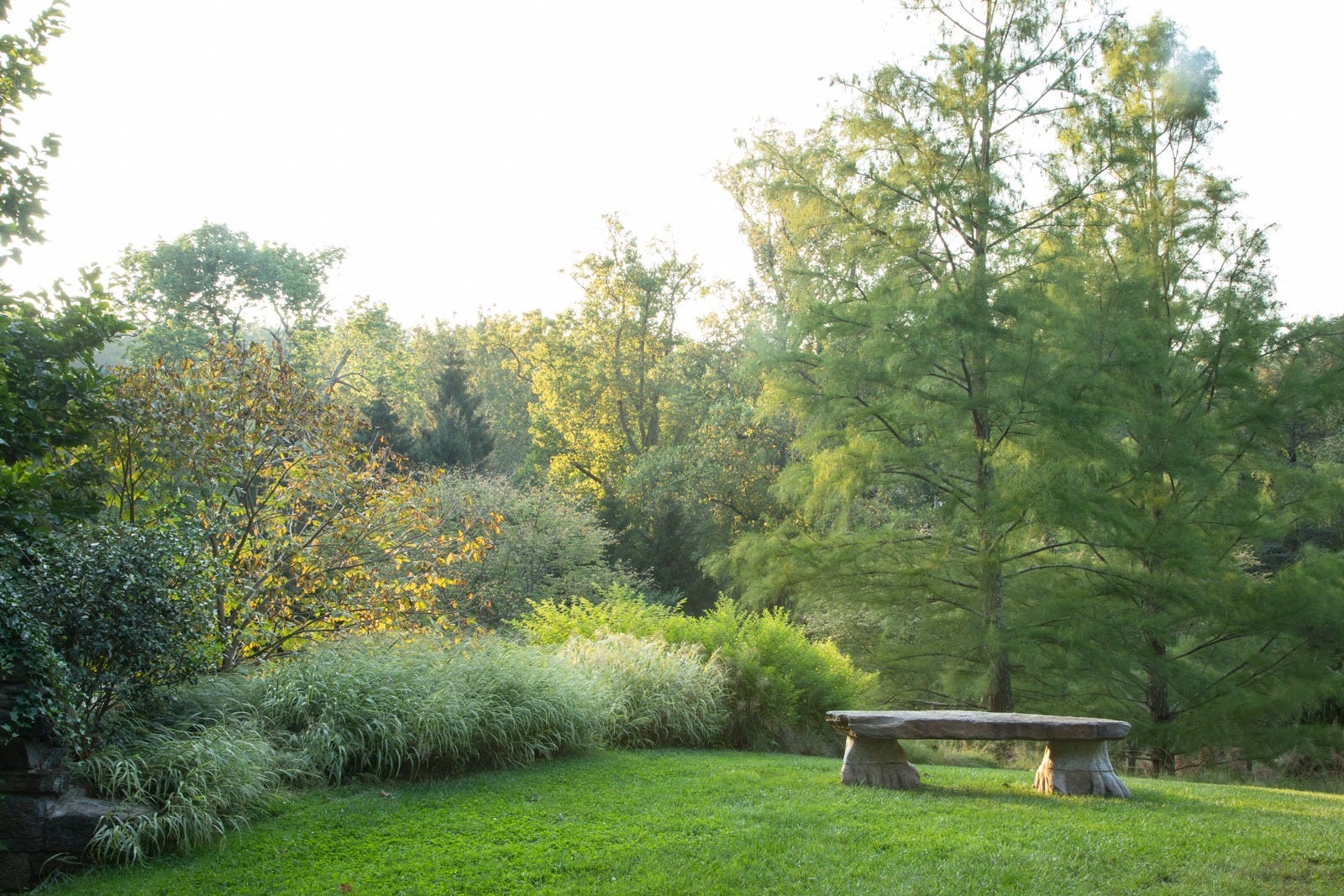
Whether in the studio or en plein air, painting has taught me how to look more closely at the world. I paint from life, meaning I look at the thing itself, but I also paint from photos, memories, imagination, or some cobbled-together combination, which is really just another way of painting from life.
Plein air painting is more demanding than it looks, and if the full truth is told I have a love-hate relationship with it. It’s a lot, truly extra, to get set up outside with your easel, paints, brushes, substrates, and solvents. You hope you don’t get a tick crawling up your ankle, and you hope you remembered your paper towels. The light changes rapidly, which means you have to find your value pattern, figure out your plan quickly, mix your paints into the colors and tints you need for the scene, and work decisively before the particular landscape conditions you were painting are gone forever. And then you’re invariably interrupted at least once by a well-meaning passerby who wants to tell you about their Aunt Betty who is also a painter.
On the other hand, what I love about all this business is that you have to commit to what you see and then just go for it. You become absorbed in the looking and attached to the space or the object. And sometimes the everyday surface awareness, all the noise, all the ego, falls away. You become connected to something more expansive than what you normally perceive. Less like a person looking at a landscape and more like someone forever connected to it. If months or years later I drive past a scene that I’ve painted, I feel an actual tingle in my spine and smile at the recognition that this sliver of the world has somehow become part of me.
Over time, as I learned what it meant to be a painter in terms of skill or talent, what I eventually came to understand is that joy and connection are sufficient reasons to be a painter. Awe is a sufficient reason. Paying close attention is a sufficient reason. All of that gets you through a “doorway into thanks,” as Mary Oliver put it so well. I’ve come to realize that the doorway into thanks is the point.
There’s a picture book I have loved for as long as I can remember: Frederick, written in 1967 by Leo Lionni. You may know it.
Frederick is a tiny gray field mouse. He lives with his family in a stone wall at the edge of a field. Winter is coming and the mice are busy gathering corn and nuts and wheat, storing everything they will need to survive the cold months ahead. All of them except Frederick, who sits in the sun. He gazes at the meadow. He seems to be doing absolutely nothing.
The other mice ask why he isn’t working. He tells them he is working. He is gathering sunrays for the cold dark winter days. Another time he says he is gathering colors. Another time, words for when they run out of things to say.
When I revisited this book recently, I decided also to search online to find out what contemporary adults think of the story when reading it to their children. And I found myself on Reddit. One commenter dismissed Frederick as a “lazy stoner mouse,” and another said the book “doesn’t really have an ending” and that he hoped the family let him starve when they ran out of food.
These comments are hilariously, instructively wrong. What happens is that winter comes. The food runs out. And then the family turns to Frederick.
He closes his eyes. He shares the sunrays, and the mice feel warm. He shares the colors, and they can see the meadow again. He shares the words, and for a little while they are somewhere else entirely, somewhere winter cannot reach. His gatherings carry them through the rest of the cold gray season. And the mice look at one another and say, Frederick, you are a poet. His face turns red at their praise, and he says cutely, “I know it!”
Some stories stay with you like that from childhood. They recede for a time but then always return. And one day you make a connection you could not have made before, and suddenly you understand why the story always resonated.
What Frederick knows, and what it took me years to understand about my own creative practice, is that some work might not look like work from the outside. But if you know what you are made for, it doesn’t matter. Joy and play and dreaming are not the opposite of serious purpose. Paying attention is its own form of labor, a labor of love, and what it produces cannot always be named in advance or easily measured.
The fact that this story has stayed with me has something to do with what psychologist Dan McAdams calls narrative identity: the way we make a self through story. We come to know who we are not from a list of accomplishments but from the stories we return to, revise, and keep telling. And we don’t just happen to find those stories randomly. We need them to be available to us.
The slow realization that painting was a practice of awe and gratitude rather than a means to any particular end is one of those stories for me, along with the story of Frederick believing in his gifts before anyone else could understand them. These narratives have changed what I understand about myself and the world.
What Leo Lionni’s Frederick shows more eloquently than I can is that the things that make you different or help you to make meaning are not “extra” to your life; they are integral to it. Winter always comes, and what you gather in the sun is what will get you through, and bring you joy.