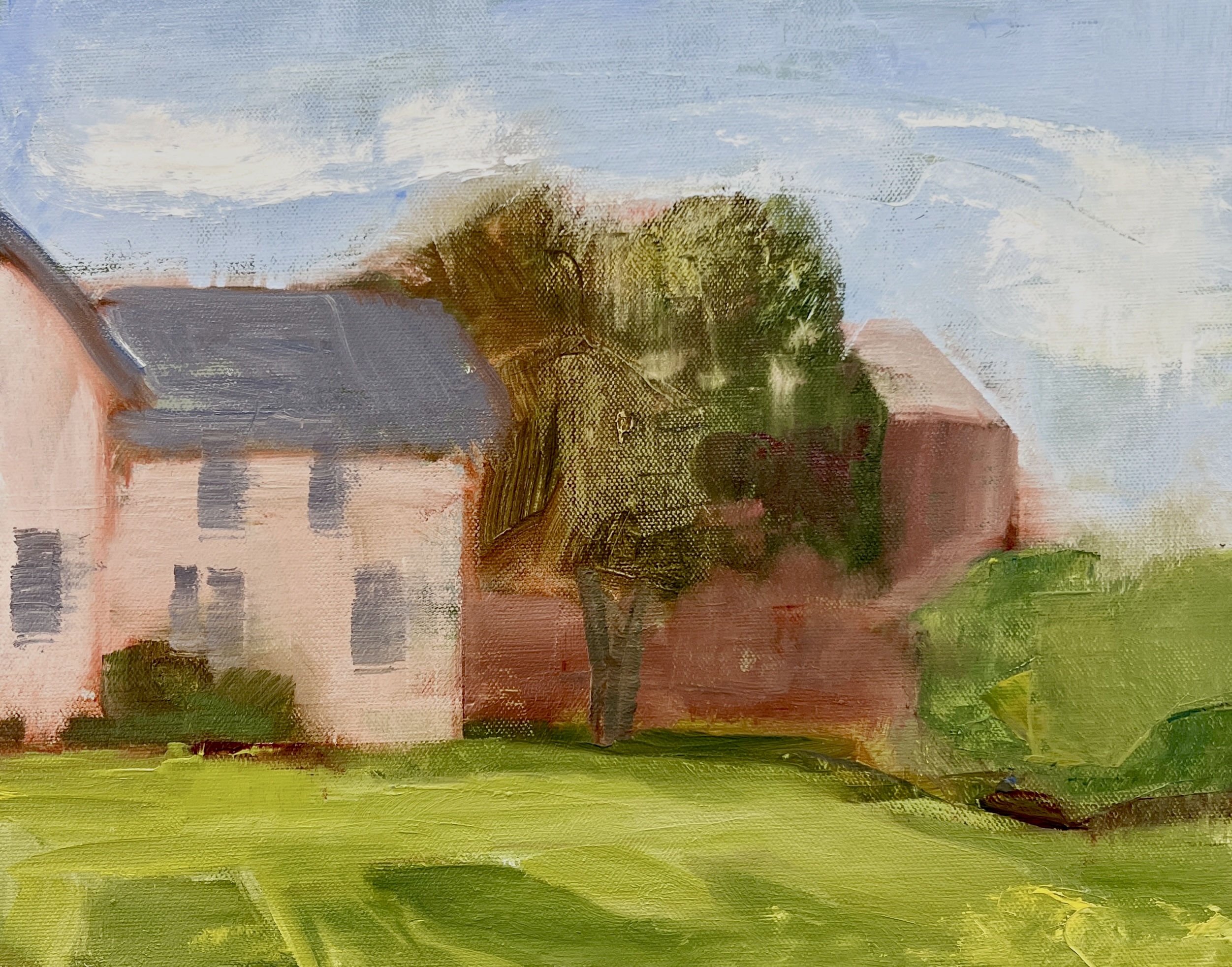
When I’m painting, I nearly always like the first, sketchy draft of a piece the most. The shapes are usually strange and the overall feeling is fresh. In this example (left-click on photo to see full view), the tonal range is limited, meaning the lightest and darkest values aren’t too far apart. There’s a haziness that brings coherence and maybe mystery, and a bit of burnt sienna showing through from an underpainting unifies the scene. Most importantly, there’s still a feeling of space in which to imagine something, a sense of becoming. Now the test for me is not to go too far beyond this initial freshness, and I often go too far.
The way I struggle with this challenge reminds me of Fairfield Porter’s interest in how painting deals with appearances and how those appearances are charged with what he called an instability or volatility. He said we rarely let ourselves see this instability except when confronted by it in art. Perhaps this instability is what I’m trying to preserve.
Then I think about one of Richard Diebenkorn’s ten rules to himself for starting a painting. He reminded himself that the “pretty, initial position which falls short of completion is not to be valued except as a stimulus for further moves.” I doubt he would have written this rule for himself unless he also felt an attraction to this initial position.
For now, I’m going to aim for staying closer to this pretty, unfinished state. Maybe paintings are like people: less meant to arrive than to stay open, still becoming.